
This is my standard explanation of what the issues is with the maths curriculum as I see it. When I went to school we did the SMP books. I can’t remember a lot about my lessons. Generally we picked up an SMP book, worked through it, then marked our work, recorded our score and moved onto the next book. I was good at maths at school but also bored rigid. I also got a U in my mock exam – which is probably the only reason I went on to do well because I really hate failing. Maths was taught as discrete topics, you learn skills on how to solve a set problem and remembered that skill.
Maths teaching has changed, but not everywhere. I am sure that many of us have been in lessons (or taught lessons) that go for the old fashioned model of.
- Teacher explain skills / method
- Teacher gives an example that students copy
- Students practice the questions
- Teacher marks the questions
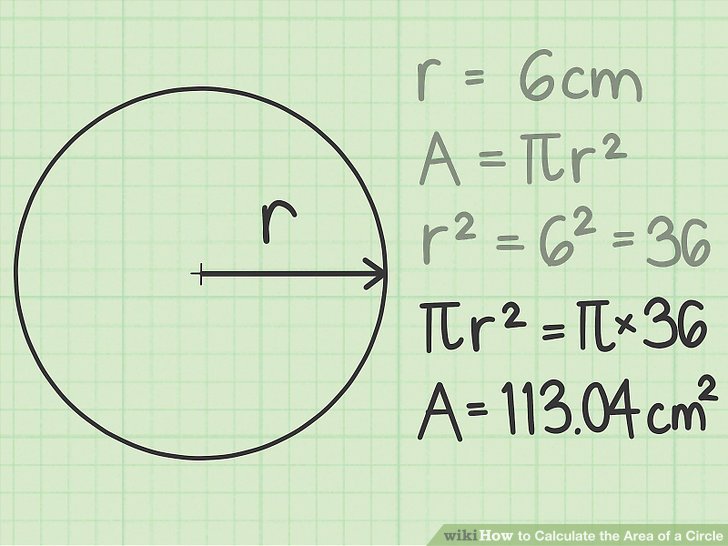
What you end up with is the illusion of progress. Students can copy what the teacher has done. There is progress in that lesson, they couldn’t find the area of a circle before and by the end of the lesson that can. The teacher is a good teacher. The students feel like they’ve achieved something and the classroom behaviour is probably good because it’s pitched right.
But do they students remember what to do, and more importantly, can they apply that knowledge. The problems with this is there is often no real understanding. (I am sure Andrew Old will want to question my use of words there. They can do a skill repeatedly with no misconceptions, but I do not think that there is that concept of “Why”)
What happens next lesson? It may be recapped as a starter, but then the teacher will often go onto to the next topic. The student who missed the lesson will not see it again, the student who didn’t quite understand it is left behind or given extra homework and we have to wonder if they can apply this skill or use it in an unfamiliar situation. The next lesson is on the area of a trapezium or on calculating circumference, another key indicator ticked off on the progress grid.
The problem is, in my opinion, the teacher has missed the point of the lesson. Some AFL at the end of the lesson can focus on “can the students find the area of a circle” and set interventions. What this issue is, is that we are focused on the SMP method from school of topic. We see “Area of a Circle” as a topic – a standalone TV program that people have tuned into. What they don’t see is it’s part of the long running serial “Rearranging Formulae and Substituing in Values”.
What do you want out of this lesson, or in child speak “when are we ever going to need to know this?”. I have never, in my adult life, (outside maths lessons) needed to calculate the area of a circle. And if I did, I would look it up or use a computer program. That’s okay, that’s not the point of the lesson.
In my opinion we need to stop looking at individual episodes and look at the serial. What the key skills we want from our students is the ability to take a formulae, to apply it to a situation, to rearrange it and to substitute in numbers. If we start remembering that this is the skill we are actually trying to teach then it doesn’t really matter whether we teach if through the medum of area of a circle, of circumference of a circle, or area of a trapezium, though Pythagoras. What we do is we teach all these topics (they’re your monster of the week part of the episode) but what we care about and assess is how well can students rearrange and substitute. Because that’s what they get day in, and day out, that’s what they’re assessed on, and that’s what they assess themselves on.
What is the end result? Firstly students and teachers know what skill they are meant to be focusing on, they can spend longer on topics, they can change the difficulty level to be appropriate for their students, they can personalise the learning and add stretch… but they can all focus on the same topic.
By the end of the series, all students are fluent (Another word for Andrew Old to question me over) in the ability to rearrange and substitute. Give them a formula and they can use it. This means that we can find the area of any shape, given a formula… or Volume. We can use our SUVAT questions in Science. We don’t have to use tricks like Distance/Speed/Time triangels or SOH CAH TOA triangles to rearrange because we can live and breath it.
So, this is my key thought, and what I want to focus my curriculum design around. Stop teaching discete topics and giving the illusion of progress, and instead work on a deeper knowlege of the skills that matter. In this case, substitution and rearrangement of formulae. Get this sorted in year 7, and watch as maths and science lessons become so much easier to teach.
As a foot note, may schemes of work I have seen teach solving equations before they teach rearrangement. Because solving it they can talk about balancing and doing the same to both sides, and students can do it more easily. Knowing how to solve a linear equation through a formulaic method doesn’t help you rearrange… knowing how to rearrange well means that solving any equation becomes routine.
 Maths S1 E1